
 Pawar & Sons
Slope & cut protection
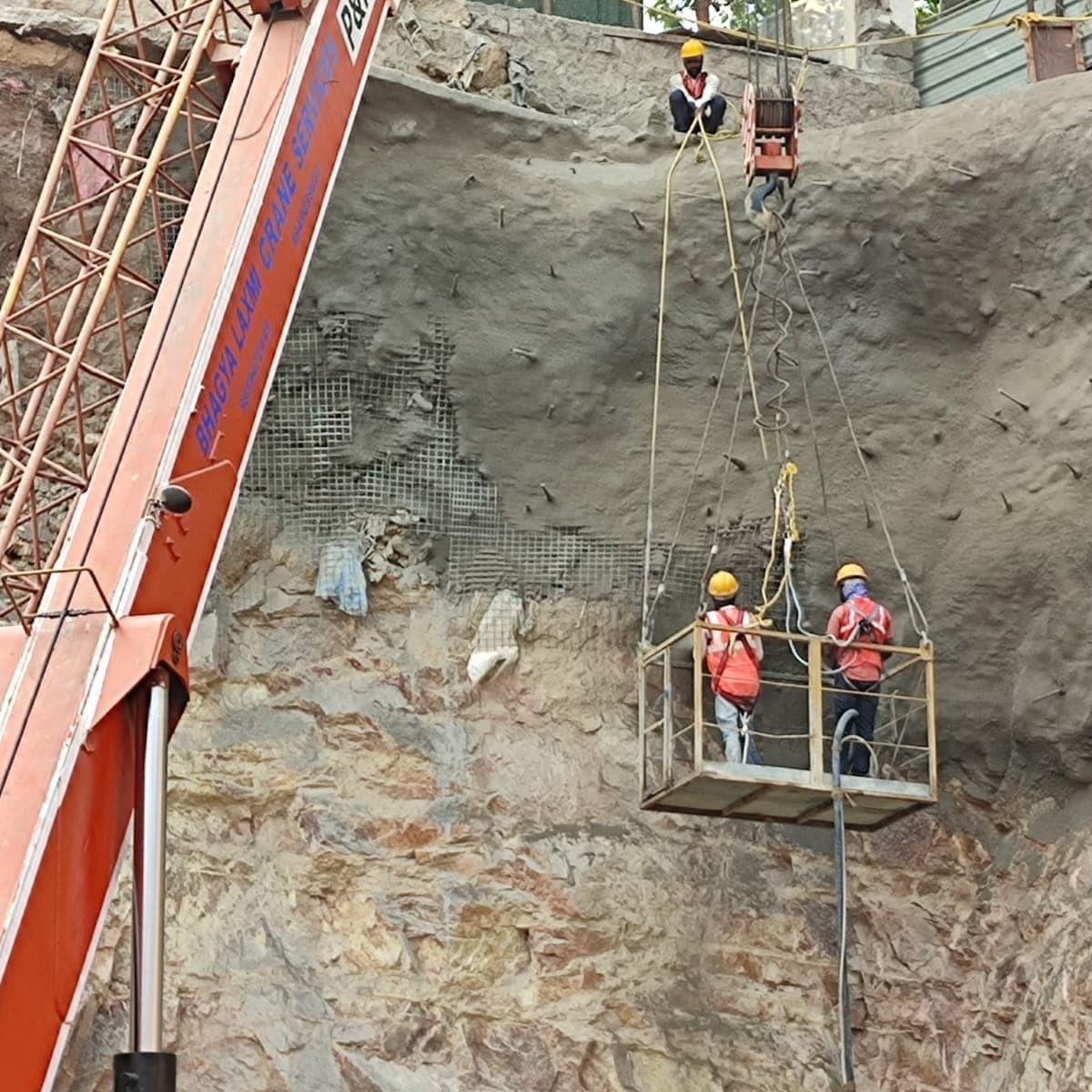
Covering highway and railway cuttings, hillside roads and site slopes to stop erosion and surface slips.
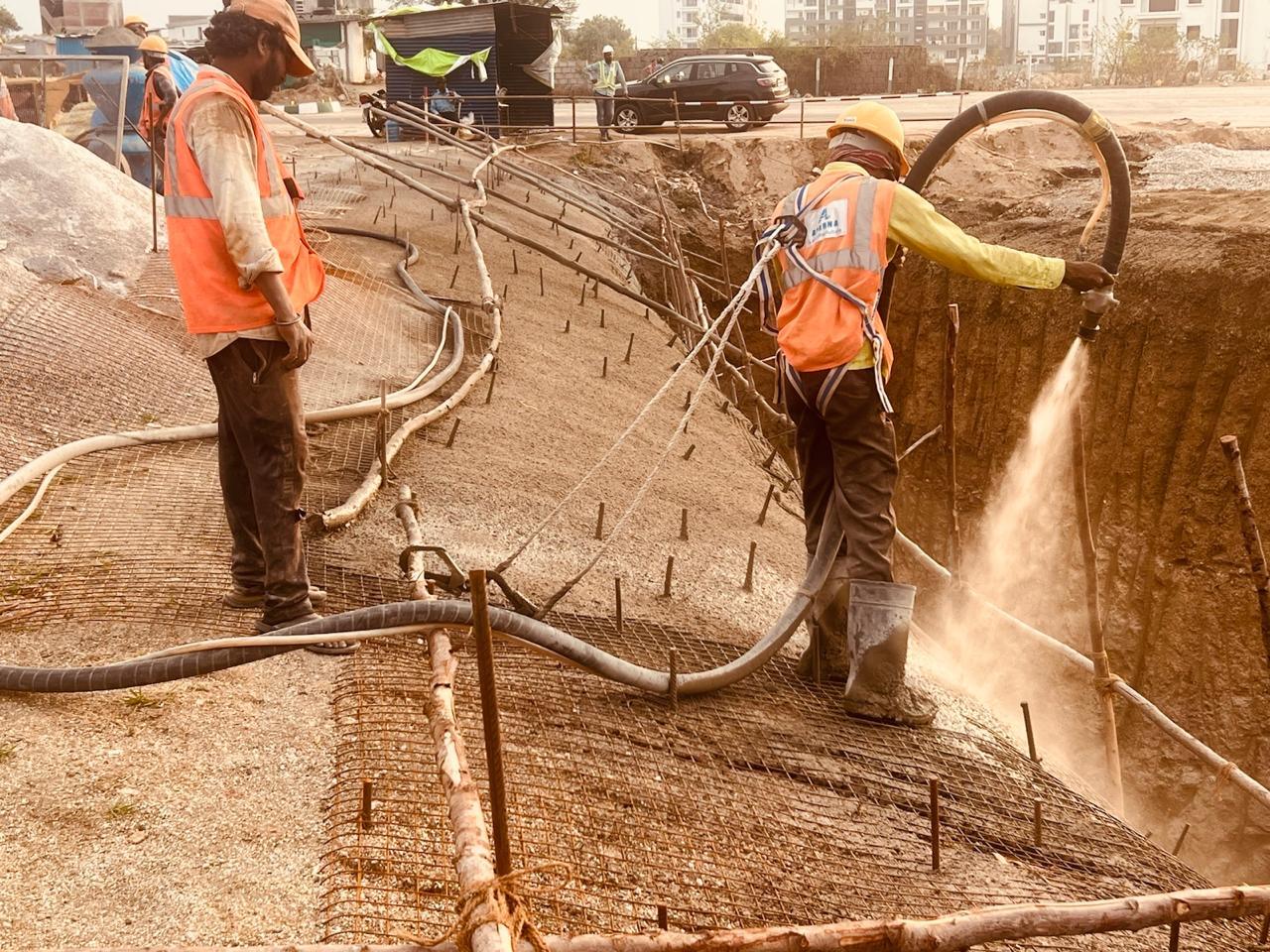
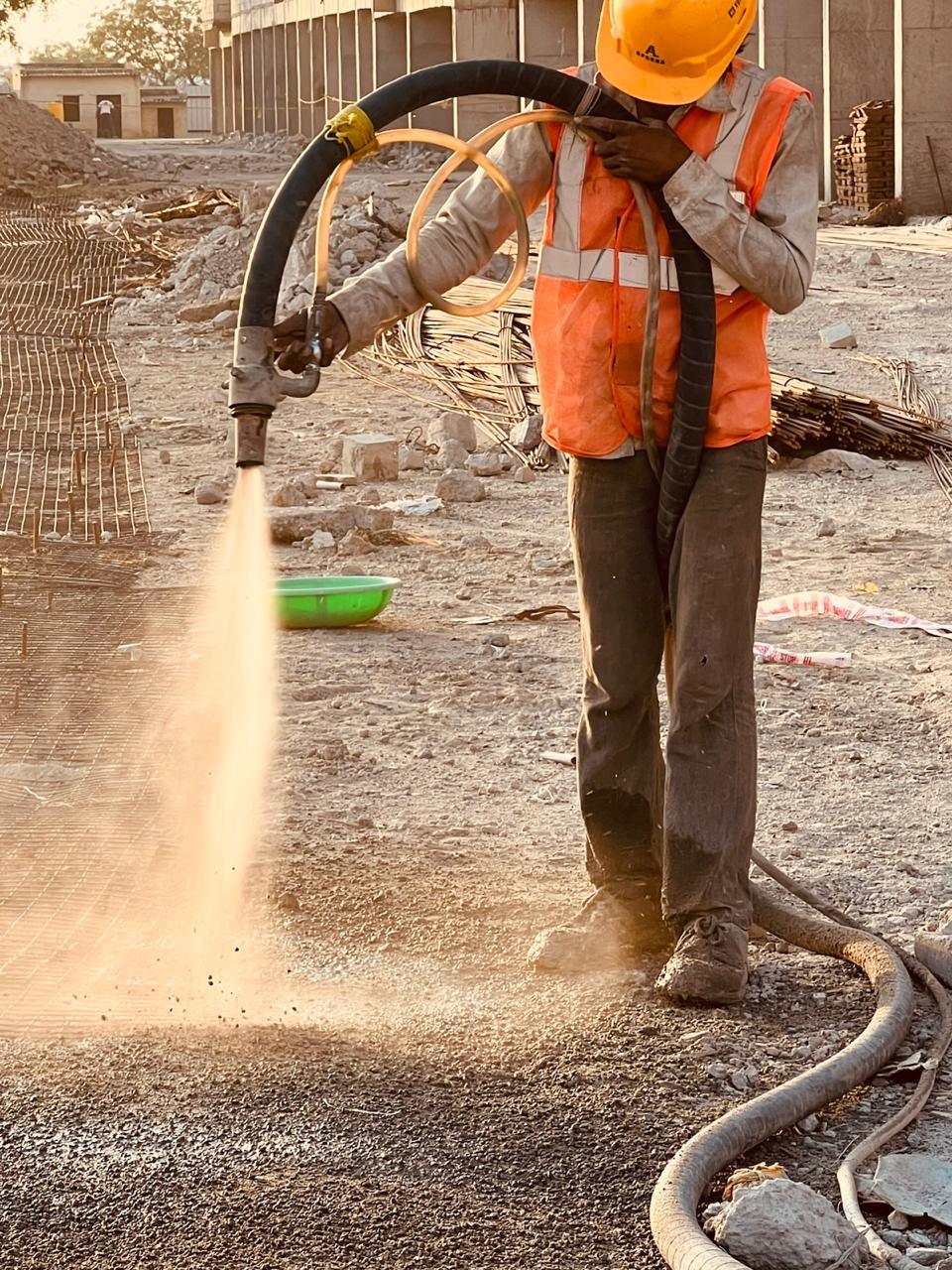
We spray concrete straight onto slopes, excavation faces, tunnel linings and damaged structures, by dry-mix guniting or wet-mix shotcrete. No formwork needed, and it bonds tightly to rock, soil and old concrete.
Concrete, sprayed exactly where it’s needed.
Shotcrete goes on at high velocity, so it compacts itself against the surface. That makes it the practical way to cover irregular rock and soil faces, curved tunnel linings, and vertical or overhead areas that formwork can’t reach.
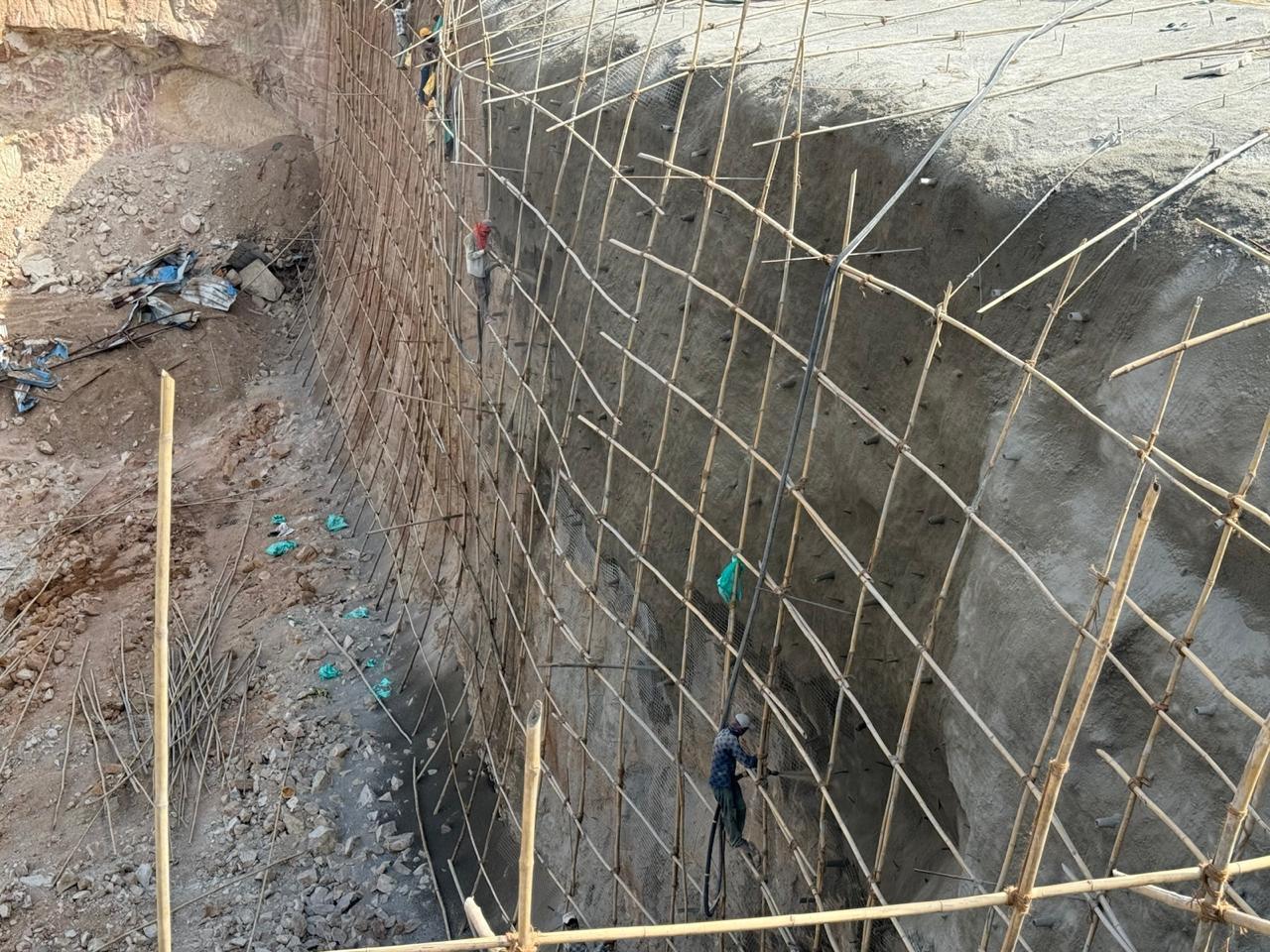
On excavations it’s usually paired with soil nails and mesh as a permanent or temporary facing. On older structures, guniting rebuilds lost cover and strengthens tanks, walls, columns and slabs.
We pick the process to suit the job, and explain why in our proposal.
| Factor | Dry mix (guniting) | Wet mix (shotcrete) |
|---|---|---|
| How it works | Dry cement and aggregate blown through the hose; water added at the nozzle | Ready-mixed concrete pumped and sprayed with air at the nozzle |
| Best for | Repairs, small or scattered areas, hard-to-reach locations | Large slopes, excavation faces, tunnel linings |
| Output | Lower, easy to start and stop | Higher, suits continuous work |
| Rebound & dust | More | Less |
| Hose length | Long hose runs possible | Shorter, needs a pump close by |
Covering highway and railway cuttings, hillside roads and site slopes to stop erosion and surface slips.
Facing over soil nails and mesh for deep basement cuts beside roads and existing buildings.
Primary and final linings for tunnels, culverts, shafts and pipe jacking pits.
New facings and repairs on retaining walls, canal linings and drain walls.
Guniting to restore cover and strength on water tanks, columns, beams, slabs and chimneys.
Sealing fractured and weathered rock faces against spalling and water entry.
Basements, rock cuts and retaining walls, sprayed by our own nozzlemen, for clients including Aparna Constructions and Sobha. Tap any photo to enlarge it.
Loose material is removed and the surface is trimmed and cleaned; old concrete is chipped back to sound material.
Welded mesh or reinforcement is fixed with pins, nails or anchors at the specified cover.
Depth guides are set for thickness, and weep holes and drainage strips are placed so water can escape.
Concrete is sprayed in layers at the right distance and angle, building up to the design thickness.
Natural gun finish, flash coat or trowelled finish, depending on the specification.
The surface is kept moist while it gains strength, and thickness and quality are checked.
Our own gunite machines, compressors and nozzlemen, working alongside our soil nailing and anchoring crews when the job needs all three.
Yes. Most of our shotcrete and guniting work is in and around Bengaluru and Hyderabad, on basements, slopes, retaining walls, tunnels and structural repairs. We also work across Karnataka, Telangana and Maharashtra.
Guniting is dry mix: cement and aggregate are blown through the hose and water is added at the nozzle. Wet-mix shotcrete is pumped already mixed. Dry mix suits repairs and hard-to-reach areas; wet mix suits large areas like slopes and tunnels.
The design sets the thickness. Slope and excavation facings usually go on in one or more layers over mesh, while repairs can be much thinner. We use depth guides so the specified thickness is reached.
Yes. Steel or polypropylene fibres improve toughness and crack control, and in some cases reduce the need for mesh.
Like any concrete, it must stay moist while it gains strength, by water curing or a curing compound, especially in hot and windy weather.
Send the location, approximate area and a few photos of the surface. We’ll visit your site in Bengaluru or Hyderabad and send a method and quote.