 Pawar & Sons
Deep basements
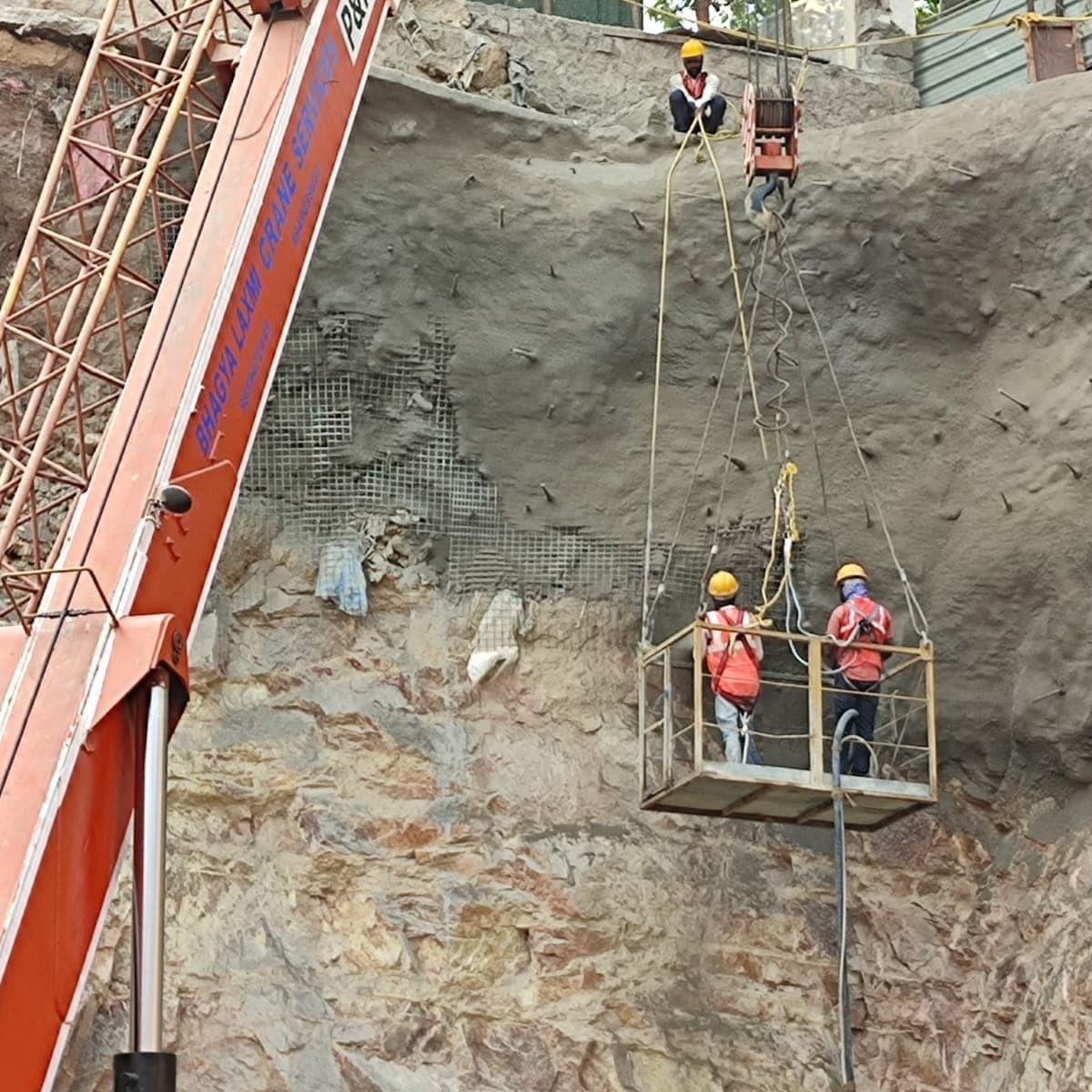
Tie-back anchors holding piled or shotcrete walls in deep basement excavations.
When an excavation or wall carries more load than soil nails can take, we tie it back to stable ground or rock with drilled, grouted and stressed anchors.
Too much load for nails? Anchor it.
Ground anchors are drilled deep behind a wall or excavation face and grouted into stable ground or rock at their far end. Each one is then tensioned and locked off, so it actively pulls the wall back instead of waiting for the ground to move.
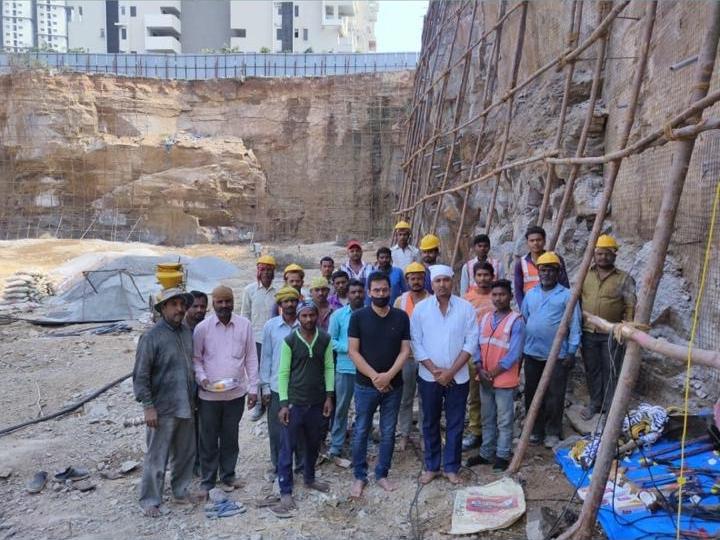
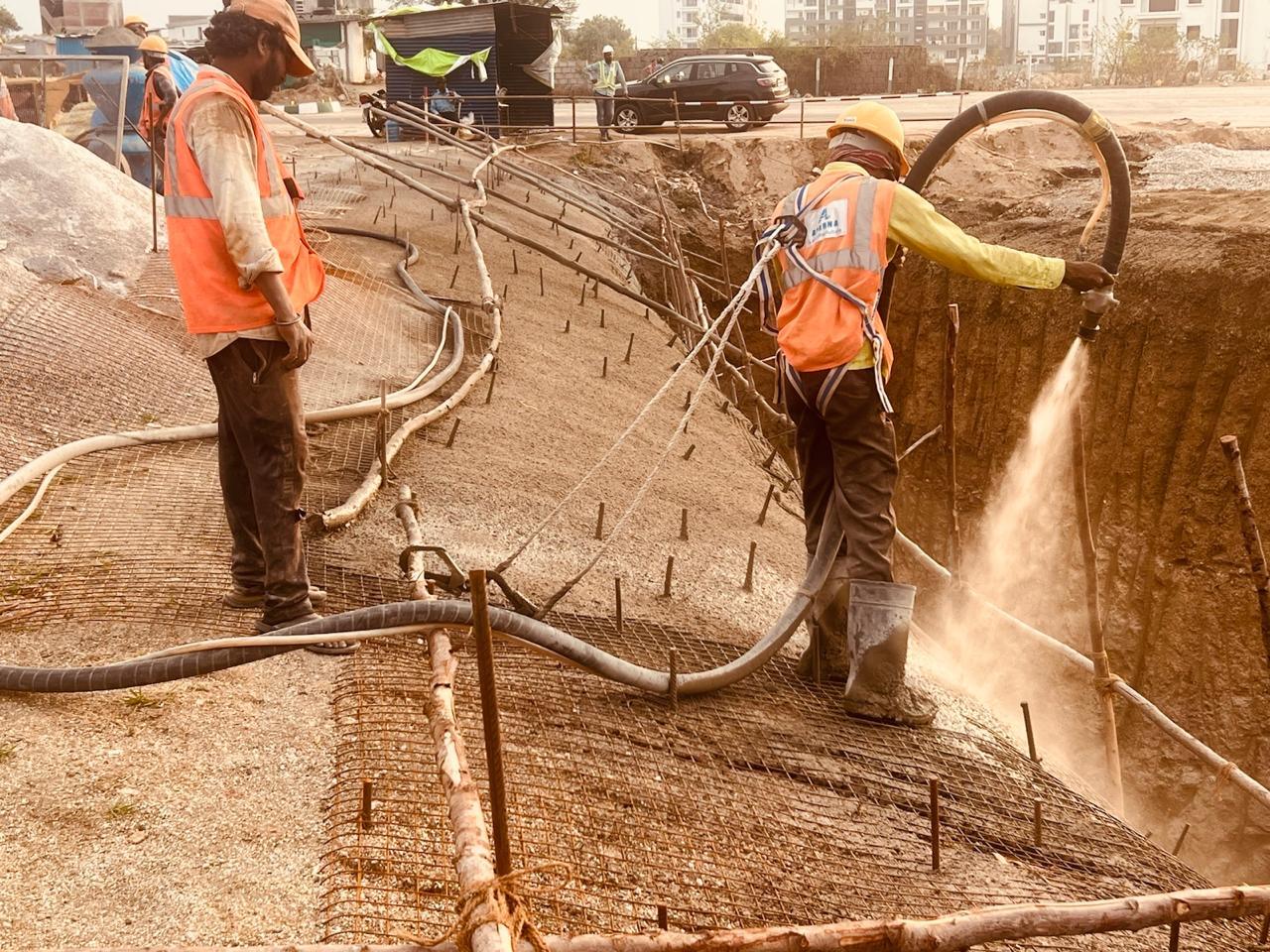
On rock cuts, shorter rock bolts pin jointed or loose granite blocks to the sound rock behind. Both are usually finished with mesh and shotcrete, and work alongside soil nails where loads vary down the face.
Tie-back anchors holding piled or shotcrete walls in deep basement excavations.
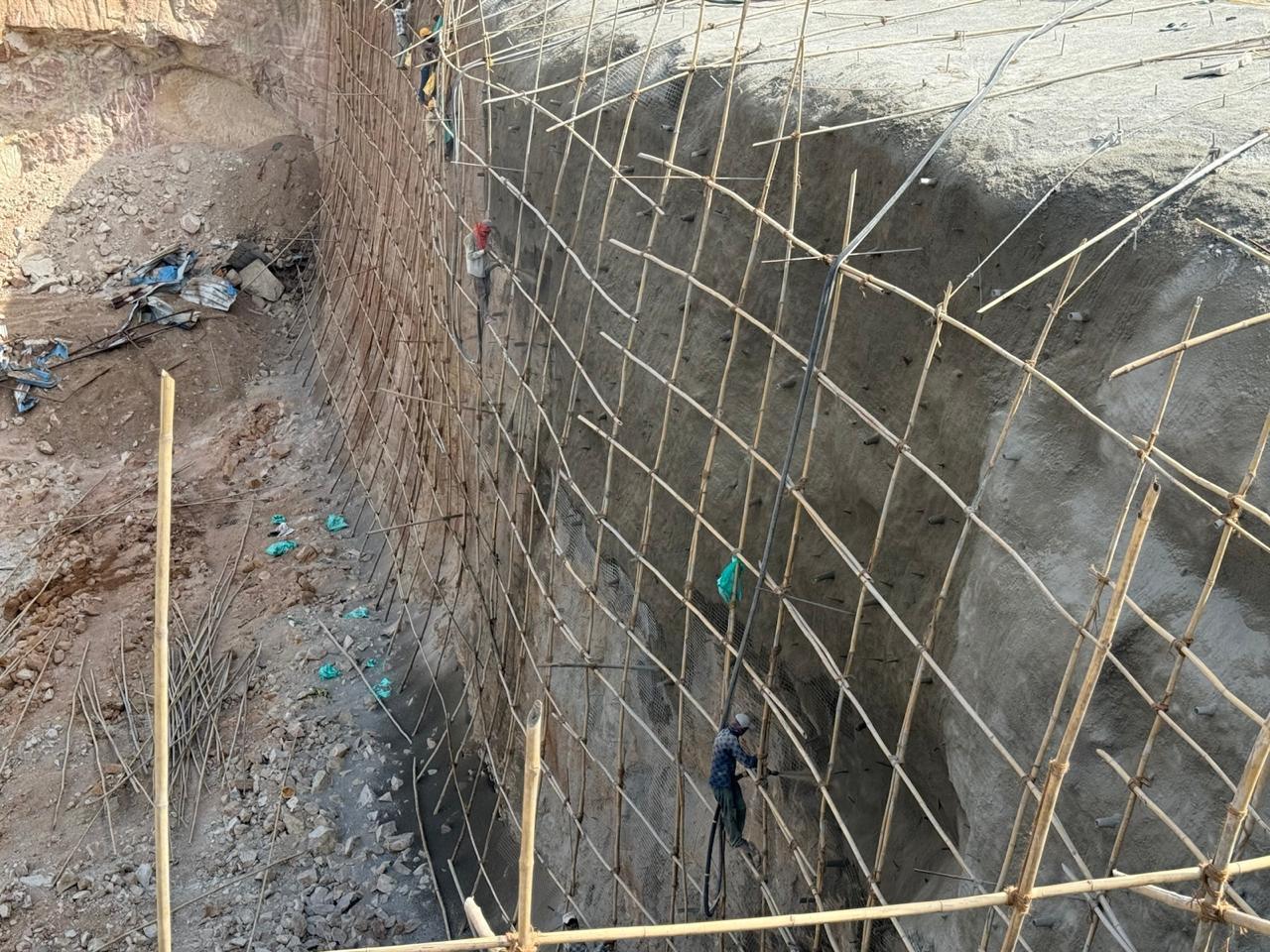
Rock bolts pinning jointed granite on tall excavation faces.
Anchors tying retaining walls back where the wall alone can’t take the load.
Tension anchors under basements and rafts to resist water pressure.
Anchors through slip-prone slopes into stable ground below.
High-capacity support where movement next to a structure must be kept small.
Two different tools. Many excavations use both.
| Soil nails | Ground anchors | |
|---|---|---|
| How they work | Passive, take load as ground moves | Prestressed, actively hold the wall |
| Load per unit | Lower, many closely spaced | High, fewer and more widely spaced |
| Bonding | Grouted along their full length | Free length plus a bond length at the far end |
| Testing | Pull-out tests on sacrificial nails | Load test on each anchor before lock-off |
| Typical use | Basements and slopes in stiff ground | Deep cuts, high loads, next to buildings |
We review the design and mark anchor positions, angles and lengths on the face.
Holes are drilled to the full length through soil and into rock.
Strands or bars are placed, with the free length sleeved and the bond length exposed.
The bond zone is grouted and left to gain strength.
Each anchor is load tested and locked off at the design load against the wall or waler.
Test results and lock-off loads are recorded for every anchor.
Faces held with bolts, nails, mesh and shotcrete. Tap any photo to enlarge it.
Ground anchors are prestressed: each anchor is tensioned and locked off, carrying a high load and actively holding the wall back. Soil nails are passive and closely spaced, and carry load only as the ground moves slightly.
Yes. Anchors are normally stressed and tested individually, with a load test before lock-off, as the project specification requires, and the results are recorded.
Yes. Rock bolts pin loose or jointed blocks of granite back to sound rock on excavation faces, which is common on Hyderabad and Bengaluru rock cuts. They’re usually combined with mesh and shotcrete.
Temporary anchors support an excavation until the basement structure takes over. Permanent anchors stay in service for the life of the structure and need extra corrosion protection. The design decides which is needed.
Send the site location, depth and design drawings. We’ll review the anchor design and send a method and quote.